Showing posts with label math. Show all posts

BOOM Learning Cards: A Game-Changer for Every Classroom

how to use digital task cards

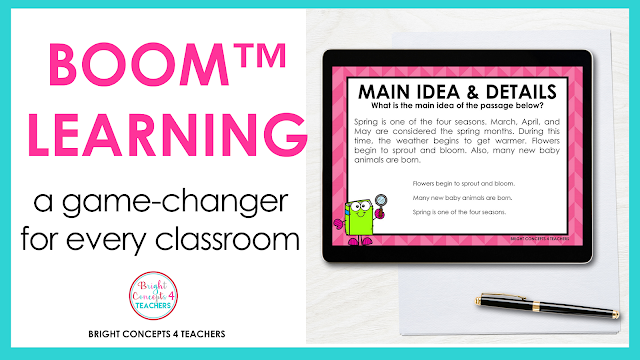
In today's ever-changing educational landscape, technology has become an integral part of the learning process. As teachers, we are always looking for ways to engage our students in interactive and effective ways while nurturing their love for learning. This is where Boom™ Learning cards come into play. Boom™ Learning is an innovative platform that offers a wide range of digital learning cards designed specifically for elementary students. 

Immersive and Interactive Learning:
Boom™ Learning cards provide a dynamic and immersive learning experience that engages students' attention. The platform combines appealing visuals, interactive activities, and instant feedback, making learning fun and exciting for young minds. With Boom Cards, students actively participate in their learning, promoting critical thinking and problem-solving skills.

Differentiated Instruction:
One of the greatest challenges for elementary teachers is catering to the diverse needs and learning styles of students in a single classroom. Boom™ Learning cards offer an extensive library of cards that cover various topics and skills, allowing for differentiation and personalized instruction. Teachers can easily assign specific decks to individual students or groups, tailoring the learning experience to meet their unique requirements.

Self-Paced Learning:
Every student learns at a different pace. Boom™ Learning cards provide a self-paced learning environment where students can progress through activities at their own speed. This individualized approach enables students to grasp concepts thoroughly before moving forward, reducing frustration and building confidence. Teachers can track students' progress and identify areas where additional support may be needed, providing targeted intervention when required.

digital task cards, Boom Learning

Real-Time Feedback and Assessment:
Assessment plays a crucial role in monitoring student progress and informing instruction. Boom™ Learning cards offer real-time feedback, allowing students to receive immediate responses to their answers. This instant feedback not only helps students identify mistakes, but also reinforces correct responses. Teachers can access comprehensive data and reports, gaining valuable insights into student performance, identifying areas of strength and weakness, and tailoring their teaching accordingly.

Engaging and Interactive Assessments:
Traditional assessments can often be mundane for students. Boom™ Learning cards introduce gamification elements to assessments, transforming them into exciting challenges. Students can earn rewards, unlock levels, and achieve milestones as they progress, fostering a sense of accomplishment and motivation. By making assessments enjoyable, Boom™ Learning cards help reduce test anxiety and promote a positive attitude towards learning.
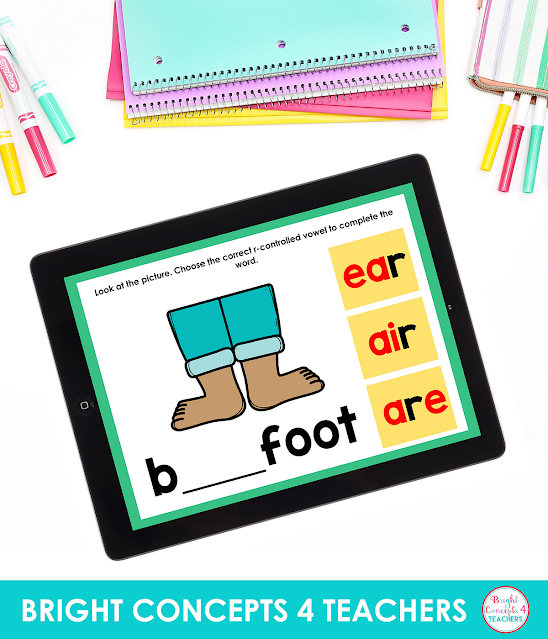
digital task cards for r-controlled vowels

Seamless Integration and Easy Accessibility:
Boom™ Learning cards can be seamlessly integrated into existing lesson plans and curriculum. The platform is compatible with various devices, including laptops, tablets, and interactive whiteboards, ensuring easy accessibility for both teachers and students. Additionally, Boom Cards can be used in the classroom or assigned for homework, extending the learning experience beyond the school walls.

Ready To Get Started with BOOM Learning? 
Your students will be so excited to use Boom™ Learning and you will love the ease of use. Simply assign your class a deck of your choice and watch the magic happen. CLICK HERE for a closer look.
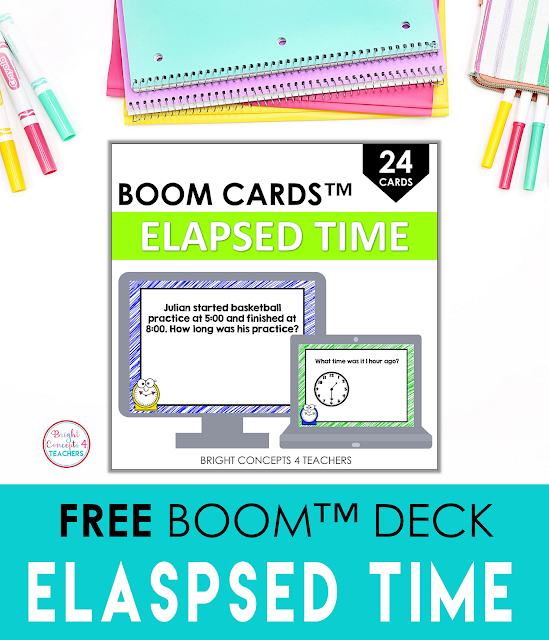
Free digital task cards
*Disclaimer: "I may earn a referral prize when you use my discount."

{LIKE THIS POST? DON'T FORGET IT! PIN IT!}


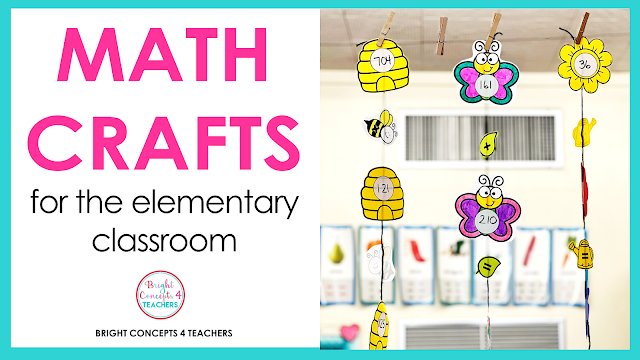
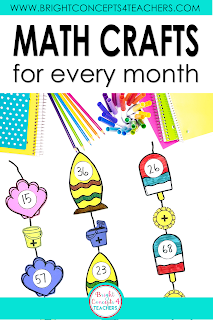
Using Thematic Math Crafts To Promote Math Fluency

math fluency, math crafts, thematic crafts

Math fluency is a crucial skill that lays the foundation for a lifetime of mathematical success. As elementary teachers, it's our responsibility to ensure that students not only grasp mathematical concepts, but also develop a strong fluency in basic operations like addition, subtraction, multiplication, and division. While traditional worksheets and drills have their place, incorporating hands-on and engaging activities can make a significant difference in motivating and reinforcing learning. 

Making Math Fun:
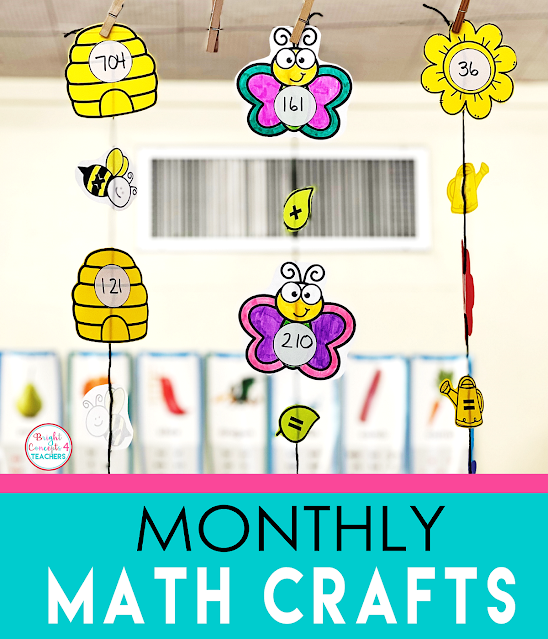
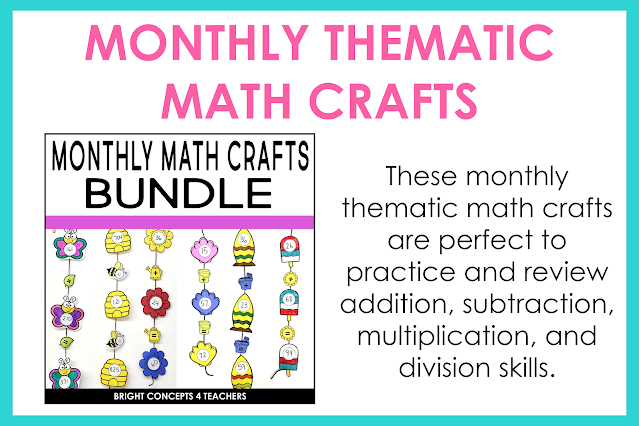
Using monthly thematic math crafts, helps transform the learning experience into something exciting for young learners. These crafts provide an opportunity for students to apply their addition, subtraction, multiplication, and division skills while creating something tangible and visually appealing. With each new theme, students will eagerly anticipate the craft-making process, which in turn nurtures their enthusiasm for math.

Hands-on Learning:
Hands-on activities are powerful learning tools that actively engage students in the learning process. These math crafts allow students to physically manipulate numbers, symbols, and objects as they solve problems related to the given theme. The tactile experience of crafting, combined with mathematical problem-solving, creates a multi-sensory learning environment that caters to different learning styles and promotes a deeper understanding of mathematical concepts.

math crafts, math fluency, thematic math crafts

Reinforcing Math Concepts:
Repetition and practice are key to developing math fluency. Monthly thematic math crafts offer a fun and creative way to reinforce mathematical concepts repeatedly. By integrating basic mathematical operations into each craft, students will encounter these concepts in various contexts, solidifying their understanding and retention of the skills.

thematic math crafts, math fluency

Collaboration and Communication:
Working on creating math crafts can also foster collaboration and communication skills. Assigning students to work in pairs or small groups promotes peer learning and encourages students to discuss and explain their reasoning. As they tackle math problems together, they develop important social and communication skills that are essential for their overall growth.

Visual Representation:
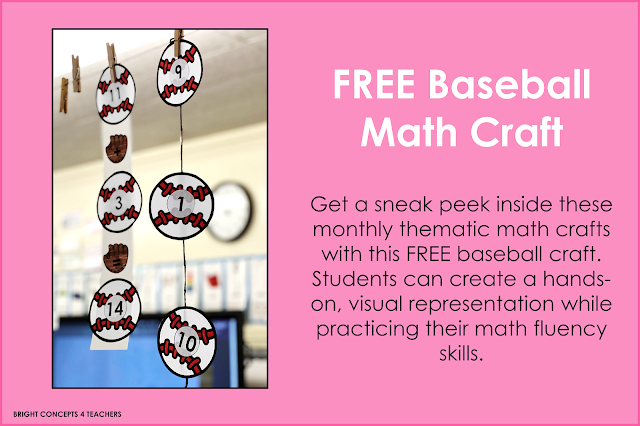
Visual aids are invaluable tools for understanding and retaining information. Thematic hanging math crafts allow students to create visual representations of mathematical problems and concepts. As they assemble the crafts, students visualize the relationships between numbers, symbols, and the final outcome. These visual representations serve as helpful references for students to reinforce their understanding and recall math facts effortlessly.

math craft, math fluency, baseball

Integrating monthly thematic hanging math crafts into your elementary classroom can be a game-changer for promoting math fluency. By nurturing creativity, hands-on learning, and collaboration into the process, students will develop a stronger grasp of addition, subtraction, multiplication, and division skills. The crafts not only make math fun, but also provide a visual representations that helps develop comprehension and retention. 

{DON'T FORGET IT! PIN IT!}


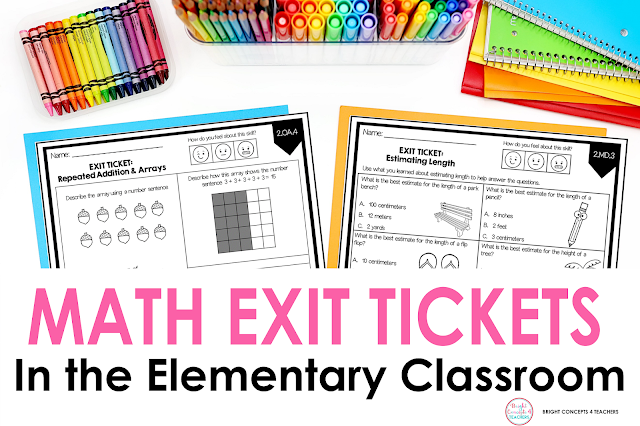
How To Use Math Exit Tickets in the Elementary Classroom

Have you ever felt you taught an incredible math lesson to your class, only to find out weeks later, when you give them a quiz or unit test, that most of your students didn't understand the concept? Trust me, you are not alone! This is one of the reasons I started to use math exit tickets in my classroom.

Math exit tickets

As an elementary teacher, you're constantly looking for effective strategies to assess your students' understanding of math concepts. Math exit tickets are a simple, yet powerful, tool which offer valuable insights into each student's learning and provides you with essential feedback to guide your instruction.

What are Math Exit Tickets?
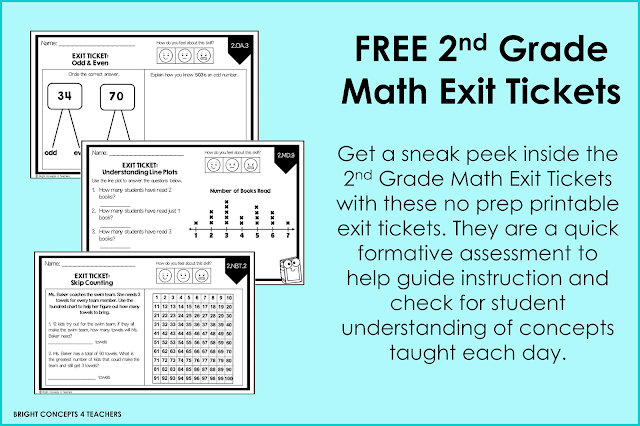
Math exit tickets are a quick formative assessment given at the end of a math lesson or guided math group lesson to help gauge students' understanding of the concepts taught. Exit tickets usually consists of a small set of questions or prompts that can be completed in a short period of time. Teachers can then use the information to guide and differentiate their instruction for the next day.

math exit tickets

Why Use Math Exit Tickets?
Math exit tickets serve multiple purposes and offer many benefits for both teachers and students:

✔️Quick Assessment: 
Exit tickets provide teachers with a snapshot of students' understanding, allowing them to assess comprehension and identify areas of strength and weakness.

✔️Inform Instruction: 
The information gained from exit tickets help to guide future instruction by helping to identify common misconceptions, adjust pacing or modify teaching strategies to meet student needs.

✔️Differentiation: 
Exit tickets help to identify students who require additional support or those who are ready for challenging tasks.

✔️Student Reflection: 
Exit tickets encourage students to reflect on their own learning and promote self-assessment skills. They help students identify gaps in their understanding and take ownership of learning progress.

math exit tickets

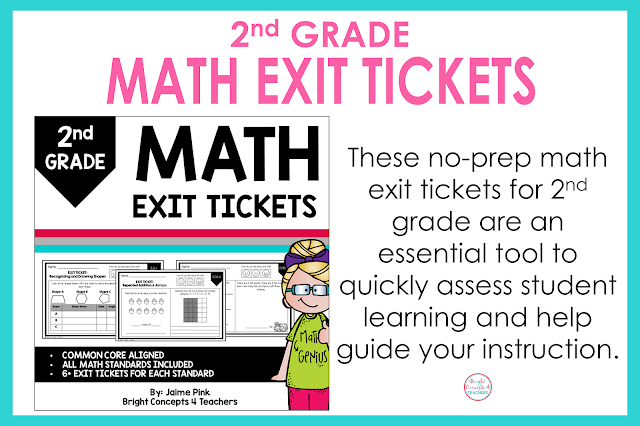
2nd Grade Math Exit Tickets

Using Math Exit Tickets Successfully:
To get the biggest benefit of using math exit tickets in your classroom, consider the following tips:

😊Align with Learning Objectives: 
Make sure your exit tickets align with your learning objectives for the lesson you have just taught. 

😊Keep It Concise: 
Limit the number of questions on the exit tickets to maintain a quick and manageable assessment. This allows students to complete them independently and in a short amount of time.

😊Clear Instructions: 
Make sure students understand what is expected of them and the format in which they should respond (ex: short answer, drawings, multiple choice).

😊Use Them Regularly: 
Consistently use math exit tickets at the end of each lesson to gather ongoing data about student progress. This regular feedback helps to adjust instruction and monitor student growth.

😊Analyze and Respond: 
Take the time to analyze the results of the math exit tickets. Look for patterns and identify areas where students may be struggling. Use this information to differentiate instruction, provide targeted interventions, or plan whole-class reteaching, when needed.

😊Feedback and Goalsetting: 
Provide timely and helpful feedback based on exit ticket responses. Encourage students to reflect on their performance and set personal goals to improve.

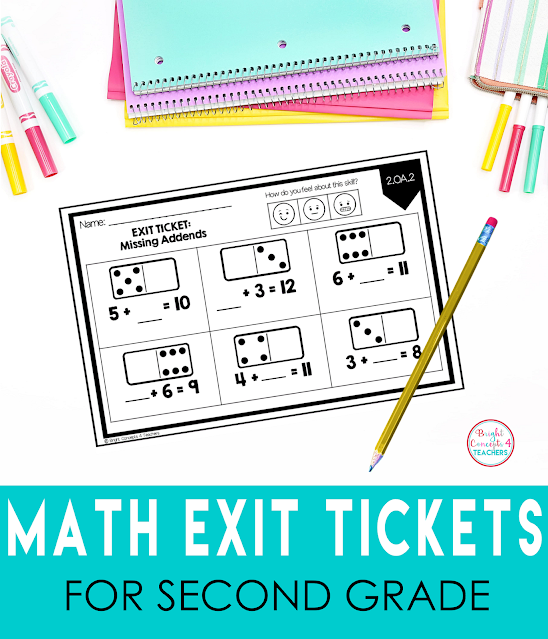
close up of math exit ticket

Math exit tickets can be a powerful tool in the classroom that offer valuable insight into student learning, inform instruction, and help students reflect on their learning. By using them regularly, you can get a better understanding of your students' needs, provide needed support, and foster a growth mindset. I hope you love using them in your classroom, as much as I do in mine!


LIKE THIS POST? DON'T FORGET IT! PIN IT!

formative math assessment 2nd grade formative math assessment


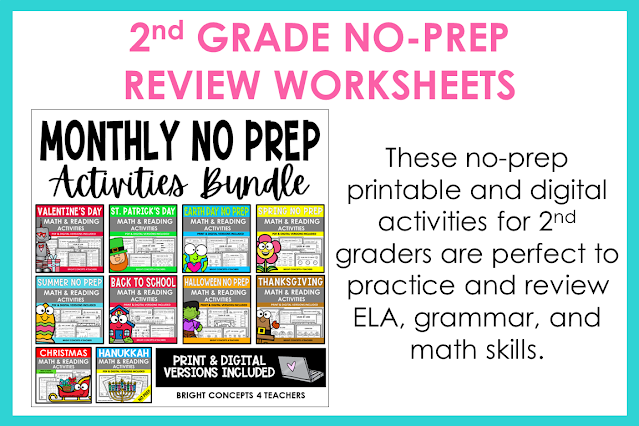
2nd Grade No Prep Review Worksheets

ELA and Math Review Worksheets

As elementary educators, we know first hand the significant amount of time we invest in preparing and planning meaningful activities for our students. We carefully craft and plan morning warm-up activities, center activities, guided reading activities and the list goes on and on. However, it's important to acknowledge that not every activity requires hours of preparation. In fact, spending a crazy amount of time on lesson prep only distracts us from other essential tasks. If you are looking for ways to save time and prioritize what really matters in your classroom, no-prep review worksheets are the way to go!
 
What are No-Prep Review Worksheets?
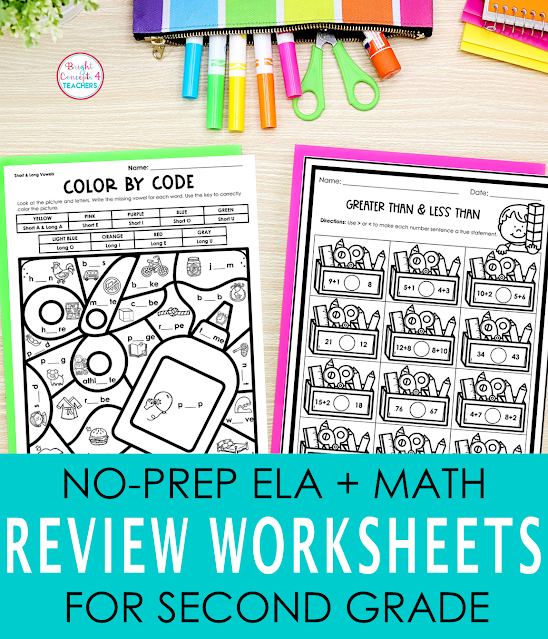
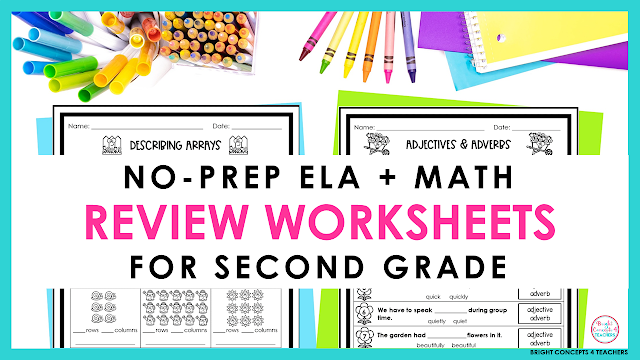
These no prep worksheets for 2nd grade are perfect for reviewing skills and are standards-aligned! This means they can be used in a variety of ways to provide additional practice with specific skills and standards. The worksheets cover important grade level skills in ELA, math and grammar, AND an added bonus....they come in a DIGITAL format too! That's right! No time to copy a class set? Ran out of copies for the month? No problem. These skills worksheets can be assigned digitally, as well! 

ELA and Math Review Worksheets


What are the Benefits?

💓 Easy to prep

💓 Choose print or digital formats

💓 Are aligned to grade level standards

💓 Saves valuable planning time

💓 Prevents endless hours of searching for the perfect materials

💓 Provides engaging review

💓 Helps with differentiation

Free ELA and Math Review Worksheets

Ways to Use Worksheets In the Classroom:

2nd grade math and ela review worksheets

⭐ Morning Work Activities
⭐ Early Finishers
⭐ Center Activities
⭐ Small Group / Intervention
⭐ Test Prep Activities
⭐ Homework and Review Packets
⭐ Sub Binder Activities 

Check out some of the topics included in the monthly no-prep packs:


ELA + Grammar
✔ synonyms + antonyms                                                                
✔ nouns                                                                                           
✔ verbs                                                                                            
✔ incomplete + complete sentences                                                
✔ sentence editing                                                                           
✔ rhyming words                                                                             
✔ short and long vowels                                                                  
✔ monthly vocabulary word search and word scrambles

Math
✔ missing numbers
✔ number order
✔ place value
✔ greater than / less than
✔ skip counting
✔ odd and even
✔ subtracting to 20


ELA + Grammar
✔ syllables
✔ long + short vowels
✔ vowel sounds
✔ complete and incomplete sentences
✔ nouns and verbs
✔ syllables
✔ monthly vocabulary word search and word scrambles

Math
✔ equal + not equal equations
✔ more or less: 10 and 100
✔ skip counting
✔ two-digit addition and subtraction without regrouping
✔ adding and subtraction to 20

Check out the other 2nd grade monthly review worksheets:


ELA and Math Review Worksheets


I hope these monthly review worksheets for 2nd grade save you tons of planning and prep time while helping your students review important standards and skills!

LIKE THIS POST? DON'T FORGET IT! PIN IT!


Homework: What's The Point?

Homework...the dreaded word for so many parents and children.

Why do teachers assign it? Why do kids and parents usually dread it? 

WHAT'S THE POINT? ✎

* Please note: The comments in this post are my opinions solely. They are based on my experiences as a classroom teacher for over 20 years and being a mother of school aged children. There is no hard core research behind my findings, just real world experiences and observations that have influenced my opinions.

This is a blog post I have been mulling over in my mind for quite some time now. I have started and stopped writing my opinions about homework and the positives and negatives about children being assigned work to do at home. It's so controversial. What will people think? Well...no more! Here it goes!

As a parent and teacher, I believe homework should NEVER be assigned as "busy work" for children to complete. It needs to be meaningful and have purpose. The meaning and purpose need to be CLEARLY communicated to the students and parents. I also believe the homework process should NOT take up a large portion of the child's after school time.

I have a middle school aged child, who has 3-5 hours or more of homework every night! It's ridiculous! Then, I have an upper elementary aged child who has 20 minutes of homework a night. Sometimes he doesn't even have any! I think that is ridiculous as well! Finding a balance is difficult, but necessary.

I do, however, believe there are many useful reasons for children to have homework assigned to them. And for the most part, the positives outweigh the negatives.


Teaching children good study habits from a young age is key to their academic success. Providing a consistent, quiet learning environment is extremely helpful, but not always possible. Children also need to learn how to get their work done even when "life is happening around them." Sometimes this is easier said than done. 


My children always know the first thing they do when they come home from school is get their homework started. It is never a fight. They might get a snack to have while doing their work, but they know the work needs to get done before anything else. Now, don't get me wrong, there are days when sports practices or doctor's appointments prevent this from happening. BUT, whenever we get home, they know the homework needs to be completed. 

A consistent routine and expectations for homework help to lay the foundation for good study habits.


Children need to learn to complete tasks within a finite amount of time. This obviously changes with a child's age and school experience. But learning how to manage one's time is a daily life skill that needs to be mastered.

Homework helps students understand and learn these skills. When children have after school activities AND homework to complete, they need to manage their time correctly. This is not a skill they can learn on their own. They need the guidance and support of their parents and teachers to help them understand how to grow their time management skills.


In my classroom, I give my students a weekly homework packet which includes daily homework mini packets that need to be turned in each day. I explain to my students and parents, at the beginning of the school year, WHY I design homework this way. First, I don't want my students sitting down in one afternoon and completing a week's worth of work in one day. Second, I want to give them options if necessary. If on Wednesday, Alexa has dance class until 5:00pm, she can start that day's homework earlier in the week to help reduce Wednesday's work load.

Parents understand and appreciate the flexibility and help their child manage their time.


When my children were starting elementary school, I spent time helping them with their homework. As each year progressed, I did less and less. My husband and I let them struggle a bit. They learn to work through things that don't come to them quickly and easily.


Up until about 4th grade, we checked out kids homework each night. Let's be honest, after 4th grade things take longer to check and the concepts are WAY more complex. You just skim for completion and quality at this point.

If it was messy, they were told to redo the assignment. If they didn't put forth their best effort, we asked them how they thought they could improve. Then they fixed it. By doing this at an early age, both kids learned to work more independently. They were able to gauge what quality work should look like on their own. This carried over into the classroom and hopefully one day, to their jobs.


We have always told our kids, school is their job. It's the one thing they have to focus on and do well. It's their responsibility to themselves and to our family.

Completing a homework assignment, putting it into their backpack, and turning it in the next day to their teacher is CRUCIAL. It's not my responsibility or my husband's responsibility to put their homework in their backpack. It's the CHILD's responsibility!

As a teacher, I loathe the answer to "Where is your homework?" The answer is either "My mom/dad forgot to put it in my backpack" or "I left it at home." And my response is always, "Who's homework is it? Who's responsibility is it to turn it in?" They usually get the meaning of the message quickly.


Homework should be a time to review and practice skills taught in school. It should NOT be a time to learn new concepts they have never been exposed to.

Homework should also be a time when parents interact with what their child is learning in school. 

Look at what skills are being reviewed for homework. Is the homework connected to the standards? Did your child understand what was taught in class? Can you clarify any concepts for your child? 

If you notice your child struggling with their homework or specific skills, reach out to the teacher. If the homework is too easy or it is taking too long to complete, reach out to the teacher.

Homework time should be one of the indicators of how your child is doing in class when you are apart from one another.

Ask questions! Stay connected!


Looking for homework resources? Click the links below for a closer look.


             Spelling Resources


    A Year of Skills in Review: First to Second Grade AND Second to Third Grade


{DON'T FORGET IT! PIN IT!}


January Bright Ideas for the Classroom

Hello sweet blog readers! Welcome and Happy New Year! I have decided to try something new this year and share monthly ideas with you in hopes of making your planning each month a bit easier. I hope you can take a few ideas, use them, and feel relieved that some of your planning is complete.


Let's get started! Don't forget: When you see ideas you love, pin them so you don't forget them!


I am all about integrating the curriculum across different subject areas whenever possible. This is why I love this snowman glyph project so much. This super simple project integrates art, data collection, writing AND makes an awesome bulletin board! 


Each student creates their snowman based on how they answer certain questions about winter. Then they can write a poem or story to go with their art project. BAM! Your bulletin board for January is complete!

You can grab this versatile winter resource HERE.

snowman glyph writing ideas and bulletin board for January

I also love to start the new year off with goals. My students make personal goals throughout the year, but I love this craft as a bulletin board in January. Each student makes a boy or girl on New Year's Eve and writes about their resolution or goals for the coming year.

You can take a closer look at this goal writing resource HERE.


January is a time to reflect, set goals, and make a fresh start. When school starts I am going to have my students make these New Year resolution books. It's a great way to get students focused and ready to learn after a few weeks off.

New Year Resolution book

You can grab this freebie HERE.

New Year Resolution


Teaching my students about Martin Luther King Jr. is something I look forward to each January. I also love it because I can carry the activities into February for Black History Month if I don't get to all the activities I have planned. Hehe.

I love sharing facts and info with a Getting To Know Martin Luther King Jr book. Then we create an interactive paper bag book with fun facts about his life. The kids LOVE making these books.


True and false questions are a great way for kids to test their knowledge of all the new learning they are doing. This is a fun center to put out or use as a whole group review.


Integrating writing and crafts is always and fun and easy way to assess student learning. These I Have A Dream kids make a great bulletin board too.


You can find all these activities and MUCH more in my Martin Luther King Jr. pack. Click here to see it on TpT.


Click the picture or HERE to grab this freebie.


I hope you found a few ideas you can use. Stay tuned for next month's February Bright Ideas. 

{DON'T FORGET IT! PIN IT!}