Showing posts with label intervention. Show all posts

BOOM Learning Cards: A Game-Changer for Every Classroom

how to use digital task cards

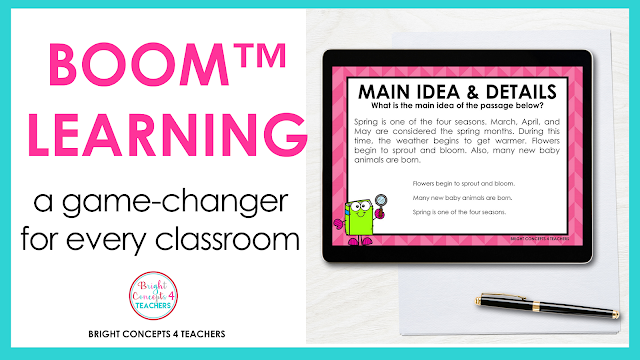
In today's ever-changing educational landscape, technology has become an integral part of the learning process. As teachers, we are always looking for ways to engage our students in interactive and effective ways while nurturing their love for learning. This is where Boom™ Learning cards come into play. Boom™ Learning is an innovative platform that offers a wide range of digital learning cards designed specifically for elementary students. 

Immersive and Interactive Learning:
Boom™ Learning cards provide a dynamic and immersive learning experience that engages students' attention. The platform combines appealing visuals, interactive activities, and instant feedback, making learning fun and exciting for young minds. With Boom Cards, students actively participate in their learning, promoting critical thinking and problem-solving skills.

Differentiated Instruction:
One of the greatest challenges for elementary teachers is catering to the diverse needs and learning styles of students in a single classroom. Boom™ Learning cards offer an extensive library of cards that cover various topics and skills, allowing for differentiation and personalized instruction. Teachers can easily assign specific decks to individual students or groups, tailoring the learning experience to meet their unique requirements.

Self-Paced Learning:
Every student learns at a different pace. Boom™ Learning cards provide a self-paced learning environment where students can progress through activities at their own speed. This individualized approach enables students to grasp concepts thoroughly before moving forward, reducing frustration and building confidence. Teachers can track students' progress and identify areas where additional support may be needed, providing targeted intervention when required.

digital task cards, Boom Learning

Real-Time Feedback and Assessment:
Assessment plays a crucial role in monitoring student progress and informing instruction. Boom™ Learning cards offer real-time feedback, allowing students to receive immediate responses to their answers. This instant feedback not only helps students identify mistakes, but also reinforces correct responses. Teachers can access comprehensive data and reports, gaining valuable insights into student performance, identifying areas of strength and weakness, and tailoring their teaching accordingly.

Engaging and Interactive Assessments:
Traditional assessments can often be mundane for students. Boom™ Learning cards introduce gamification elements to assessments, transforming them into exciting challenges. Students can earn rewards, unlock levels, and achieve milestones as they progress, fostering a sense of accomplishment and motivation. By making assessments enjoyable, Boom™ Learning cards help reduce test anxiety and promote a positive attitude towards learning.
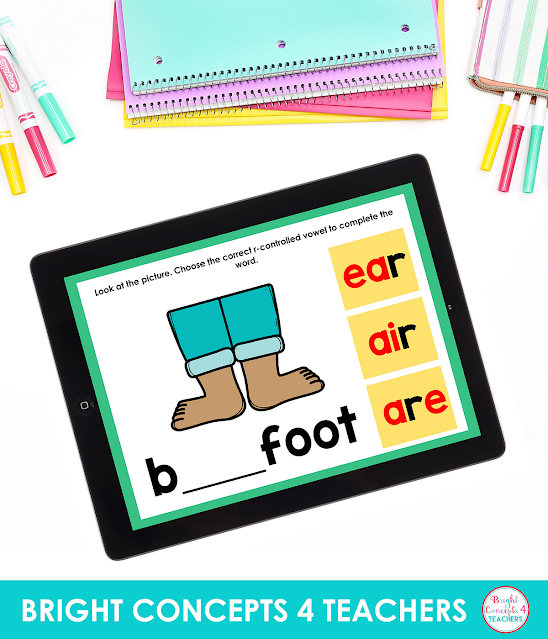
digital task cards for r-controlled vowels

Seamless Integration and Easy Accessibility:
Boom™ Learning cards can be seamlessly integrated into existing lesson plans and curriculum. The platform is compatible with various devices, including laptops, tablets, and interactive whiteboards, ensuring easy accessibility for both teachers and students. Additionally, Boom Cards can be used in the classroom or assigned for homework, extending the learning experience beyond the school walls.

Ready To Get Started with BOOM Learning? 
Your students will be so excited to use Boom™ Learning and you will love the ease of use. Simply assign your class a deck of your choice and watch the magic happen. CLICK HERE for a closer look.
Free digital task cards
*Disclaimer: "I may earn a referral prize when you use my discount."

{LIKE THIS POST? DON'T FORGET IT! PIN IT!}


Ideas to Teach Emotional Regulation In the Classroom

It seems like any normal day in my classroom. My students walk in. They are chatting, turning in their homework, getting settled and starting to work on their morning warm up. I say good morning to each of them, as they walk in the door, and greet them with a smile. 

I go to my desk to take attendance and notice Caleb isn't in his seat. He is wandering through the classroom chatting with different classmates. His things aren't put away. He goes to get a drink of water. Then he needs to use the restroom. I redirect him and get him settled in his seat.

Next thing I know, 30 minutes have passed. Most students are engaged in their morning work. Caleb, though, hasn't even started. He has 4 highlighters on his desk, a pencil sharpener, 3 pencils, 5 emoji erasers and his jacket is on backwards with the hood over his face. 

And all I can think is, "Lord, help me. This is going to be a L.O.N.G day!"

emoji emotions chart

I know I am not alone. We all have  AT LEAST one of these students in our classes. What do your instincts tell you to do? Punish Caleb? Send him to the office? Send a scathing message to his parents? Pull your hair out (always a viable option...I'm joking!). There are a few strategies you can use the help those students get back on track and improve classroom behavior.

1. SET THE TONE FROM THE BEGINNING: BUILD TRUST

Building trust with students can be accomplished in a variety of ways. After the weekend, many students come to school with "baggage" from home and need a safe way to discuss and release their emotions. Each Monday, I have a discussion circle. It's very informal. Participation is not required. It is a way to check in with each student. They can discuss something good that happened, something that is bothering them, or nothing at all. There are students that give a thumbs up, thumbs down or neutral signal and don't talk at all. I check in with those students one on one later in the day. The most important thing is that there is NO JUDGEMENT from anyone. This helps students be honest about their feelings and trust begins to be built. This process takes about 20 minutes once a week.


emotions chart

2. CHECK IN ALL DAY

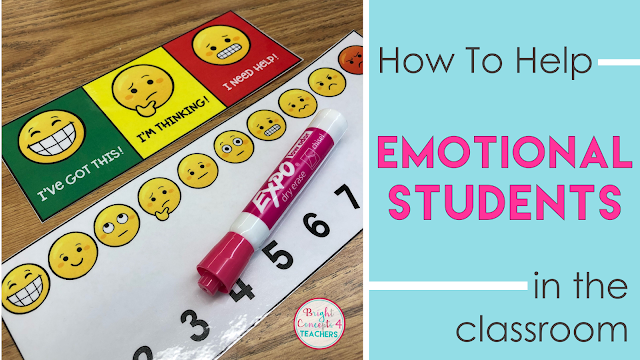
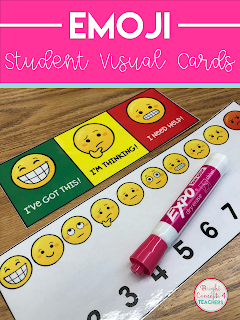
It is extremely important to continuously check in emotionally with your students all week (not just on Mondays). These EMOJI EMOTIONAL CUE CARDS are a key tool in my classroom to help with emotional regulation. Many students have difficulty expressing their emotions in words. These cards are kept on their desks and students can point to an emoji that describes how they are feeling that day. 

Students use the numbers to determine "the weight" of the issue which is bothering them. For example, Caleb may point to the angry emoji on the top right side of the card. He is fuming! However, after speaking with Caleb, you find out someone took his favorite pencil. This problem can easily be solved with some help and would only be a 1 or 2 on the number scale. 

This visual helps students see how emotionally upset they are compared to the ability to solve the issue. 

3. CREATE A "SAFE SPOT" IN YOUR CLASSROOM

As teachers, it is important to create a classroom where students feel emotionally safe. All feelings are OK and will be respected. From day one in my classroom, students know they can go to the safe spot with no questions asked. I have an area in the back of my room students may use. They can rest, do deep breathing, mindfulness exercises and just take some time for themselves to reset. 

4. MINDFULNESS ACTIVITIES WITH GONOODLE


GoNoodle is a great resource for teaching students mindfulness strategies. Students learn ways to manage stress, build their confidence and self control, as well as, build compassion for others. The students absolutely LOVE the activities!

5. BE VULNERABLE: SHARE YOUR FEELINGS

Teachers are the best role models for emotional regulation. Model for your students how to properly handle stress and emotions. Talk to them about how your are feeling when you are trying to teach them this incredible lesson and get interrupted 100 times with calls from the office, people walking in and out of the classroom and the same question being asked 20 different ways. 

Explain what you are feeling to your students. Talk about how you handle it. Also, make sure they know you are not perfect and make mistakes. This will help them realize managing emotions is a life long learning lesson! 

How do you teach emotional regulation in your classroom? I'd love to hear your ideas! 

{DON'T FORGET IT! PIN IT!}

emoji emotions chart

Literacy Centers,FREEBIE and a Giveaway-Oh, My!

I have been fighting a cold for the last few days and when I came home on Friday, I was ready to collapse. However, when I opened my mailbox a burst of delight ran through my body because I found my first TpT check in the mail! Never in my wildest dreams did I ever think when I started my blog  5 months ago that I would reach this milestone. Thank you to each and everyone of you for all for support and inspiration!

As many of you know, my team partner and I have started an intensive intervention program with our reading program Treasures. You can read about the details of the intervention HERE. I will be doing enrichment and review with those students who are at grade level in language arts. So last week I created Gobblin' Up Thanksgiving Fun-8 Thanksgiving themed literacy centers and a writing craftivity to use with them during our intervention time. Here are all the literacy centers laminated and ready to be cut out for the kids to use in the next couple weeks.

The centers include: Making Words, ABC order, fixing sentences, contractions, compound words, proper and common nouns, plural nouns and parts of speech. 
We are going to start the week off my making these cute little guys and writing a descriptive story about them:


Here is a copy of the writing paper you can grab as a FREEBIE if you like. I hope it helps get your kids ready for Turkey Time!


Also, my fellow blogging friend Corinna at Oh "FISH" ally a First Grader is having a mega giveaway to celebrate reaching 100 followers. She has over 58 products she is giving away from an incredible group of bloggers. There is something for everyone Pre-K through Middle school. Head on over to enter and you might even winning something from my little store!

I hope you all enjoy the rest of your weekend and have an amazing week ahead!


Intervention and Fall Writing

I have completely neglected my blog posting this week. Things were so busy and I am feeling a bit overwhelmed. I know I am not alone in this department.

We started parent conferences this week and will continue into next week. We are wrapping up our first reading unit which means testing, testing, testing. This will be the first time this year the kids have seen a formal test booklet, which can be very intimidating to many of my kiddos. So I am breaking it down  and testing over 5 days so they just get a little bit at a time. This usually helps their anxiety level go down.

This brings me to the topic of intervention. I have always found it frustrating and difficult to find the time during the school day to do "proper" intervention. Pulling a couple of kids for 5 or 10 minutes, never seems to do the trick. Well, this year the "magic" is happening in second grade at my school. We only have 2 second grade classes. Usually between our two classes we might have 6 kids that really need intensive intervention. This year, however, the story is different. We have about a third of our kids that are not at grade level. We knew we HAD to figure out how to consistently implement intervention. My team partner and I have finally figured out how to make it work for our kids.

Our reading program is California Treasures. The fifth day each week is an assessment and review day. We decided to combine our two classes for this time. My team partner takes all the kids that need intensive intervention for one hour, while I take all the other kids and review difficult grade level concepts or work on enrichment. That means every five days the kids are getting an hour of quality intervention! Also, the kids that need higher level instruction get their needs met as well. Now to take this to the next level, the sixth week of each Unit is review and testing.  We are combining the kids each day that week for a total of 5 MORE hours of intervention! I am so excited about the possibility of huge progress for all these kids. We are progress monitoring all of them and hope to see some significant gains.

Here are some of the things I did with my group:
We reviewed main idea and details. The kids can never get enough exposure and practice with this concept,

We also wrote stories about Mr. Leaf from Amy Lemons Fall Literacy Centers. We are going to continue with the fall centers next week and I will post more pictures so you can see the kids at work. Have a great weekend everyone!